

Female Fertility Testing
Understand your fertility - female fertility testing in Sydney
Offering comprehensive female fertility testing at my fertility clinics in Sydney CBD, Linfield, and Crows Nest so that you can have a better understanding of your reproductive health.
Tests for female fertility may be a good idea if you have been trying unsuccessfully to conceive for some time or suspect there is something affecting your fertility. The results of these tests can shed light on your reproductive health, helping to inform the next steps in your fertility journey.
Anti-mullerian hormone (AMH) and female fertility
AMH is a hormone secreted by the follicles in your ovaries. The level of AMH in your blood is considered a good indicator of your ovarian reserve - the number of eggs you could produce each month. AMH testing is through a blood test and is mostly unaffected by timing of your menstrual cycle. However, it can be affected by some medical conditions and hormone use, and it’s important that it is interpreted correctly depending on your reason for testing.
Investigation for gynaecological conditions that affect fertility
A number of conditions can affect female fertility, including polycystic ovary syndrome, endometriosis, and period problems. Our investigations for these issues may include a physical exam, blood tests, ultrasound scans, or diagnostic surgical procedures.
Pelvic ultrasound
An ultrasound scan uses ultrasound waves to create an image of your internal structures and organs. A pelvic ultrasound is a non-invasive method of visualising your uterus, cervix, fallopian tubes, and ovaries. The information gained from this scan can guide your diagnosis and treatment for infertility.
Laparoscopy
A laparoscopy can be used to both diagnose and treat female fertility problems in the pelvis. A long, thin camera is inserted through a 1cm keyhole incision in your bellybutton, providing a direct view of your internal organs. Laparoscopy can be used to diagnose and treat many causes of pelvic pain such as endometriosis, ovarian cysts, fibroids, and problems with the fallopian tubes.
Hysteroscopy
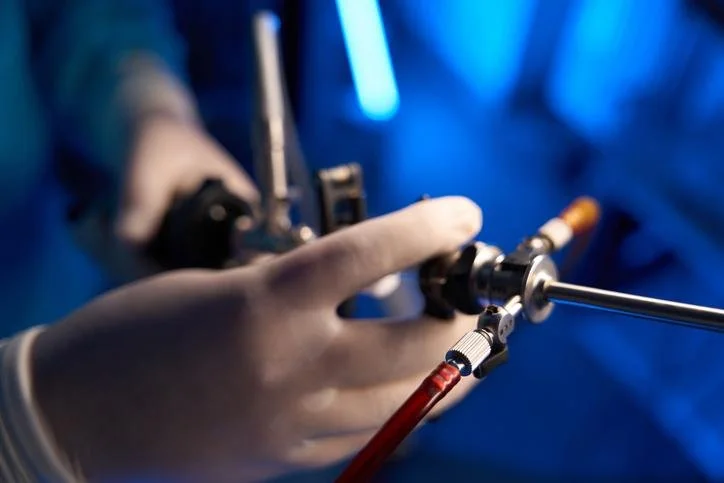
Hysteroscopy can be used to assess and treat female fertility problems inside the uterus. It’s considered the best test for examining the uterus and can uncover problems such as fibroids, polyps, scar tissue, and structural problems of the uterus. Though hysteroscopy procedures are often performed under general anaesthesia and come with risks and prolonged recovery times, I specialise in office hysteroscopy, where special equipment and refined techniques are used, allowing us to avoid general anaesthesia so you can recover immediately.
FAQs
-
The short answer is yes. While a low AMH score might sound scary because it means you don’t have as many eggs left, it’s not necessarily a problem. Humans are designed to ovulate one egg per month), regardless of how many potential eggs you may have. And the fact remains: you only need one egg to fall pregnant.
-
AMH levels are often used to tailor IVF or egg freezing treatment plans and guide expectations. High AMH increases your risk of complications such as ovarian hyperstimulation (OHSS) and if you have a low AMH, you are likely to achieve fewer eggs in one cycle. This information can help you to make informed decisions about your treatment.
-
An antral follicle count (AFC) is an ultrasound assessment of follicles in your ovaries. While it gives similar information, this result can vary much more throughout your cycle, and therefore is less reliable than a blood test for AMH levels.
-
The female reproductive system is complicated. If all preliminary tests return normal results, there are additional investigations outside of “routine” fertility tests we can consider depending on your situation and symptoms. I commonly provide second opinions for patients coming from other doctors, as it is often helpful to just have a fresh set of eyes on a case.